
Many children struggle with maths reasoning in KS1 and KS2. Here is a parent-friendly guide to building confidence and developing real problem-solving skills that last.
In this guide, we’ll cover:
- Why Problem-Solving Matters More Than Ever
- Common Barriers for Under-11s
- Common barriers include:
- Prime+’ Method for Building Confident Problem-Solvers
Does your child freeze up when faced with a maths word problem? Do they rely heavily on memorised methods without understanding the reasoning behind them? You are not alone.
Problem-solving in mathematics goes far beyond simple arithmetic. It is about developing critical thinking, helping children approach challenges with confidence, and building a foundation for lifelong learning.
When children can break down complex problems, identify patterns, and apply logical reasoning, they are not just improving their maths scores — they are developing essential life skills.
The good news is that problem-solving abilities can be developed through targeted practice, supportive environments, and the right teaching approaches.
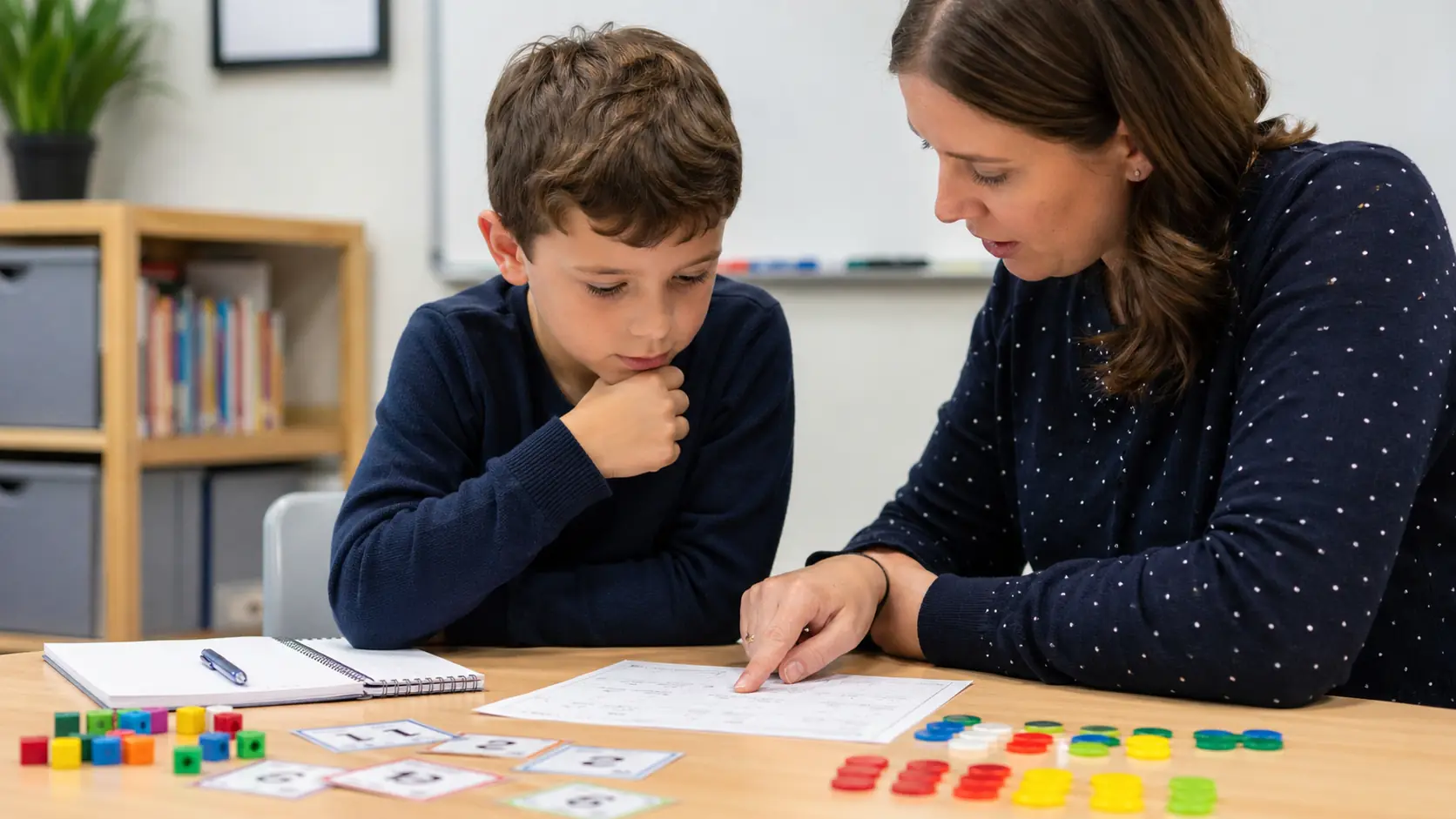
Why Problem-Solving Matters More Than Ever
Mathematical problem-solving has never been more critical for young learners. As children progress through primary education, they face increasingly complex assessments that test not just computation but the ability to reason, analyse, and apply concepts to unfamiliar situations.
SATs examinations place significant emphasis on reasoning papers, where children must solve multi-step problems, explain their thinking, and work with information in different formats.
Looking ahead to secondary school, the demands only increase. Students with strong problem-solving foundations adapt to new concepts more readily and approach algebra, geometry, and statistics with confidence.
Beyond academics, problem-solving skills transfer directly to real-life situations, from calculating change to planning journeys and managing pocket money.
Common Barriers for Under-11s

Common barriers include:
- Over-reliance on memorised methods
- Fear of being wrong
- Time pressure
- Language load in word problems
- Group dynamics in larger classes
Prime+’ Method for Building Confident Problem-Solvers
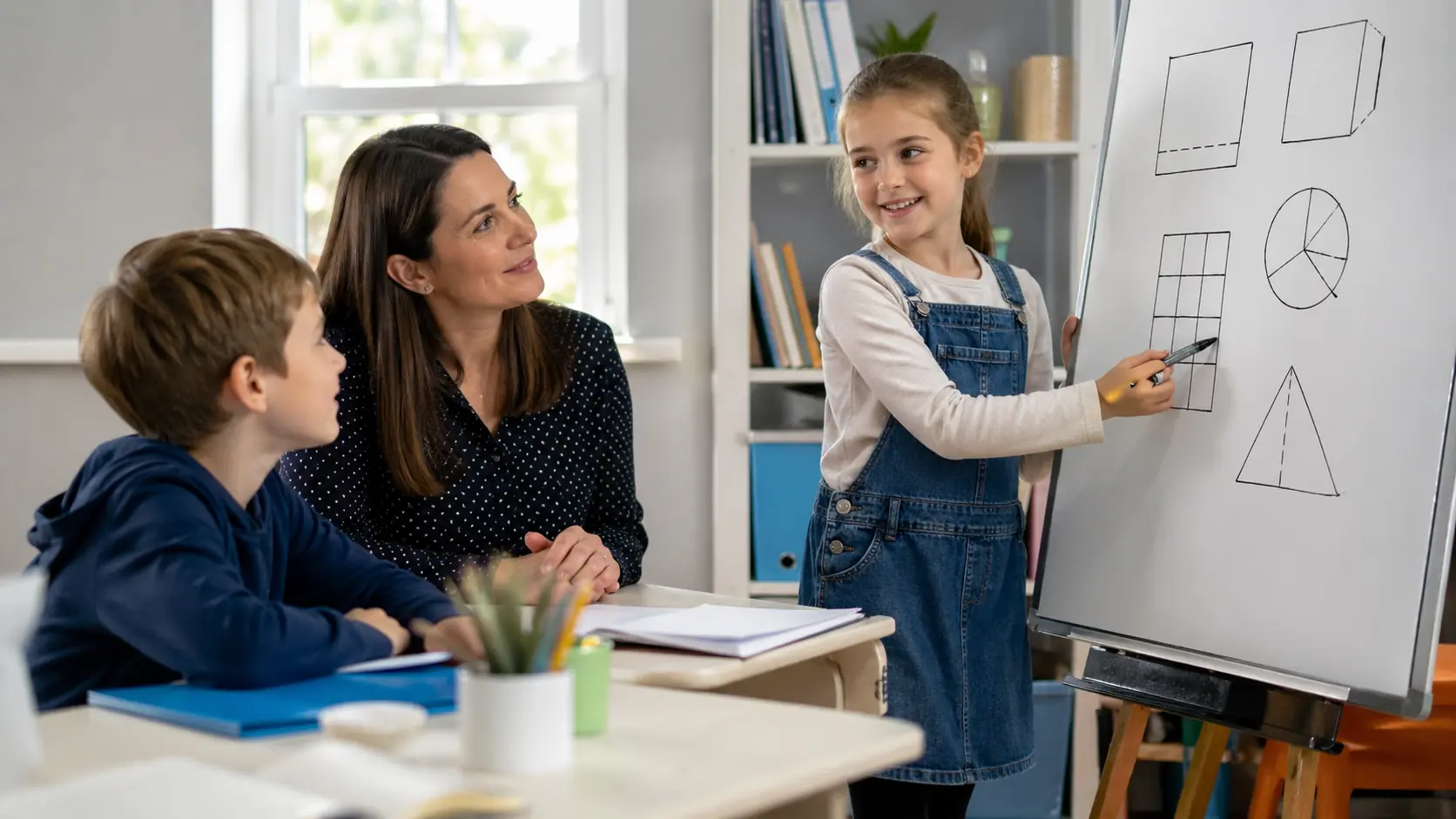

At Prime+, we run small-group maths tuition in Milton Keynes designed to tackle these barriers head-on. Our small group setting ensures individual attention with the benefits of peer discussion.
1Deep Mathematical Conversation
Children have a safe space to voice their thinking and learn from peers. Tutors can spot and address misconceptions quickly.
2Real-World Context
We connect abstract ideas to everyday situations so maths feels relevant and engaging.
3Multiple Strategies
We encourage visual models, systematic listing, and logical reasoning so each child builds a personal toolkit.
4Metacognitive Questioning
Guided prompts such as “What do we know?” and “What are we finding?” help children think about their thinking.
5Regular Feedback
We celebrate small wins and track progress at an appropriate pace to build positive momentum.
At-Home Activities for Problem-Solving Practice
Cooking
Measure ingredients, scale recipes, and time cooking to explore fractions, multiplication, and proportion.
Shopping
Total costs, work out change, and compare prices for best value.
Board and Card Games
Use games to practise money handling, probability, pattern recognition, and strategic thinking.
Explain the Thinking
Ask “How did you work that out?” or “Why do you think that?” to consolidate understanding.
Puzzle Time
Use logic puzzles, sequences, and spatial challenges in a low-pressure, playful setting.
Everyday Maths
Plan journeys, organise events, and manage pocket money to practise sequencing, budgeting, time, and distance.
Case Study: From Maths Anxiety to Confidence
Sarah, aged 8, arrived with strong calculation skills but anxiety around word problems. She often said “I can’t do it” and relied on adult prompts.
In a small group, her tutor introduced concrete, hands-on tasks and encouraged Sarah to verbalise her steps, using manipulatives to model relationships.
A breakthrough came when Sarah planned a birthday party within a budget. The task required multi-step reasoning, costs, constraints, and decisions. Solving it independently gave her a major confidence boost.
Over several months, Sarah began volunteering answers, asking clarifying questions, and supporting peers. Her SATs reasoning moved from below expected to exceeding expectations, and her attitude to maths transformed.
Building Mathematical Thinkers for Life
Strong reasoning skills support success across science, technology, and everyday decision-making. Investing in problem-solving during primary years pays dividends throughout education and beyond.
Prime+’ small-group tuition in Milton Keynes provides the ideal environment to build confidence and critical thinking that lasts.
Book a Free Maths Skills Assessment
Ready to help your child think like a mathematician? Get in touch with Prime+ Tutoring to arrange support and start building confidence.
Book a Free Assessment with PrimePlus Tutoring
Find out where support is needed and receive a structured plan designed around your child’s current level and next steps.